
Saarbrücken, nickel-titanium alloys that generate vacuum, strain sensors made of silicone — what sounds like an engineer’s fever dream and a bedtime story for everyone else is the daily business of Jens Preetz. But before you drift off: stay with me and let me put it differently. What follows is the story of a startup and its technology. Technology that can reduce the energy consumption of production lines by up to 90%. That can more than double the efficiency of heat pumps. And that makes strain and pressure sensors virtually indestructible for the first time — while simultaneously enabling pumps in healthcare applications to operate at unprecedented frequencies. Fair enough: it’s actually two technologies. But one step at a time.
Jens Preetz is standing at the mateligent booth at the International Motor Show (IAA) in Munich, working through his emails. A large table in front of him is covered with monitors and technical components. As at most booths at the IAA: components, coffee machines — but no cars. Above him, a screen informs visitors that Saarbrücken is demonstrating its automotive expertise here.
An Electrical Pulse and Ten-Thousand-Fold Lifting Power
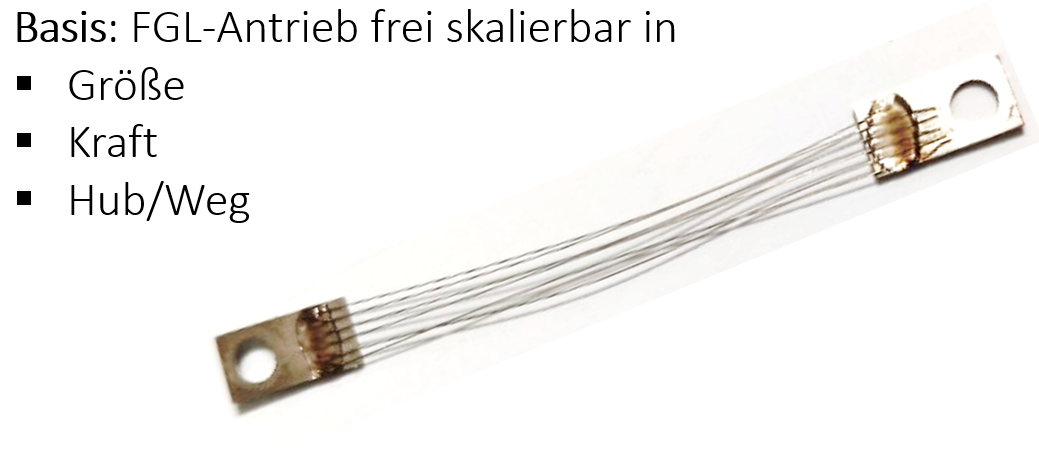
When you start talking to him, it becomes clear that he is deeply passionate about his work. Preetz holds up a thin wire. “We have a nickel-titanium wire here with a diameter of 500 micrometers and a weight of one gram,” he explains. “This wire can lift ten kilograms — ten thousand times its own weight.” How? “Simply by sending an electrical impulse through the wire.” At first glance, this is nothing new. Nickel-titanium alloys (NiTi alloys) were developed in the United States in 1958 and have since become the most widely used shape memory alloys (SMAs).
Shape memory alloys “remember” their original form and return to it when exposed to a temperature change — for example through an electrical impulse. Imagine bending and twisting a paperclip made from an SMA beyond recognition. Heat it up, and the twisted wire becomes a paperclip again. This happens because of two phases: martensite (the cold, easily deformable state) and austenite (the warm, shape-stable state). When the temperature changes, the atomic structures rearrange internally. In simplified terms: in martensite, the atoms are arranged like parallelograms. When heated via an electrical impulse, they switch to square structures with shorter side lengths — causing the wire to contract. This effect can be repeated almost indefinitely.
A Spring That Replaces Electromagnets and Pneumatics
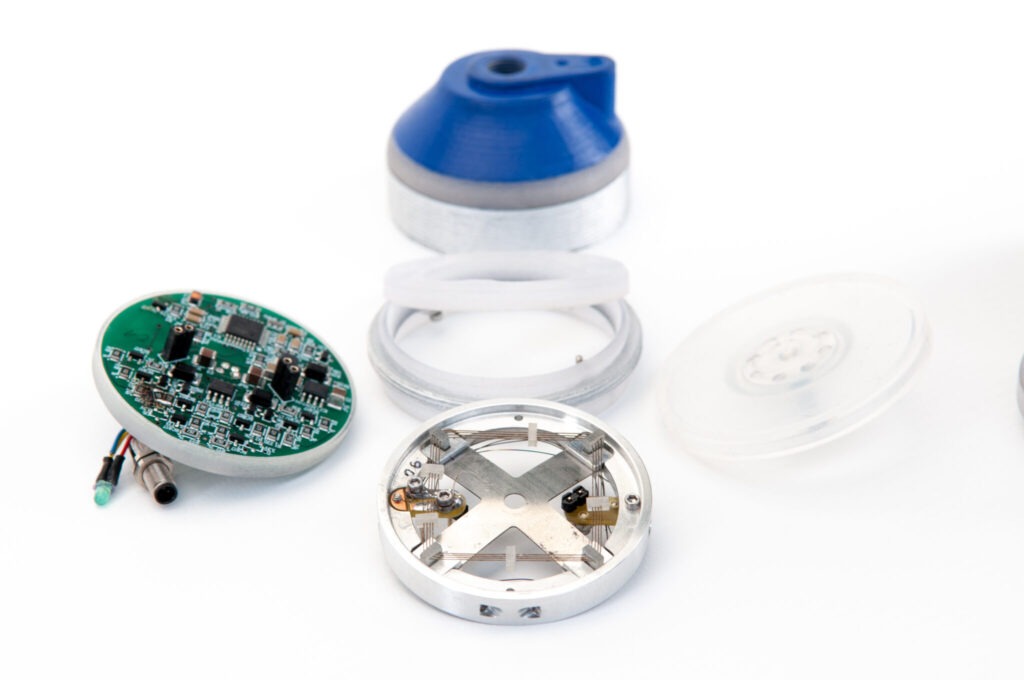
In the NiTi wire presented by Preetz, the electrical impulse triggers the temperature change — and thus the shortening of the wire. The founders of mateligent patented a further development: a round module about five centimeters in diameter. The innovation? Two bundles of parallel NiTi wires that drive a bi-stable spring. The spring looks like an “X” and can bend inward or outward like a membrane — remaining stable in either state. Switching between the two states requires only a short electrical impulse that shortens one of the wire bundles.
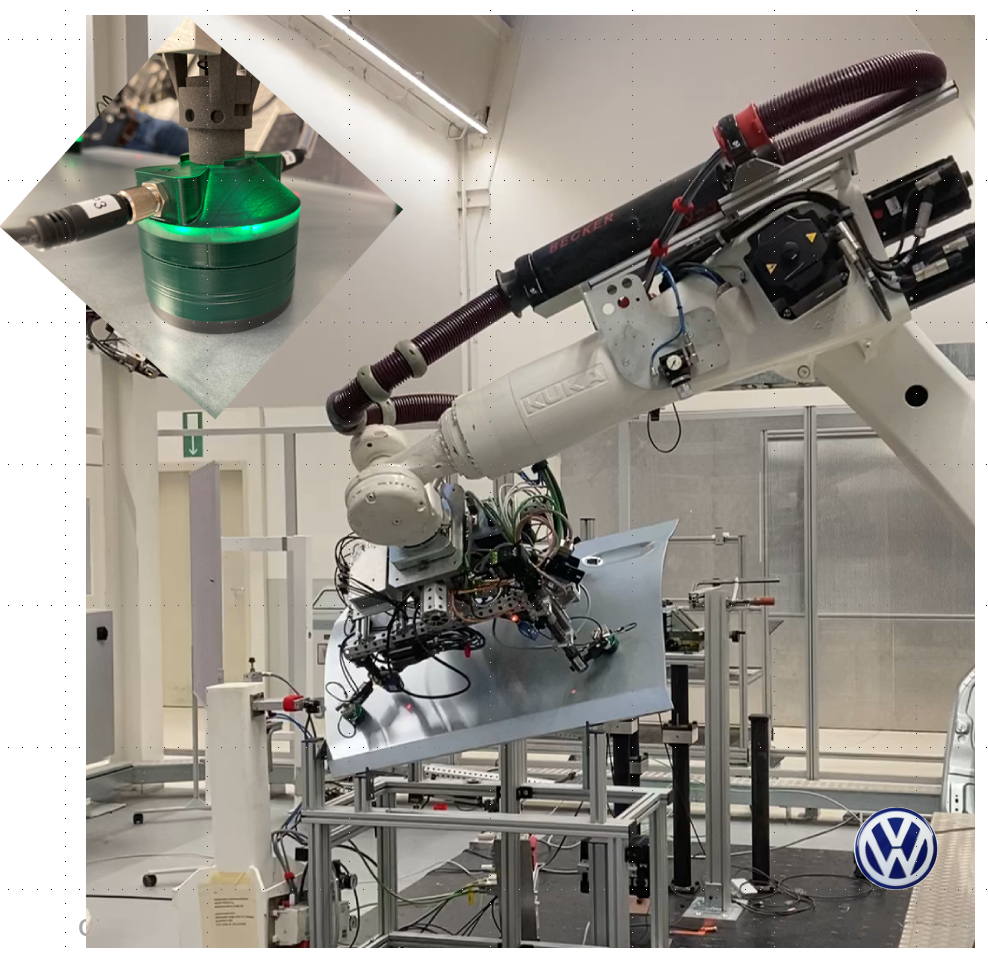
The result is an ultra-light, bi-stable actuator that can reduce weight, installation space, and energy consumption by up to 90% compared to electromagnetic drives. Where can this be used? Imagine an automotive production line. Robots operate in precise cycles — screwing, assembling, lifting components. Preetz shows a video of a gripping robot. “Normally, these robots operate with pneumatics to generate vacuum or with electromagnets,” he explains. “Pneumatics and vacuum generation are among the biggest energy consumers in production. A single vacuum gripping point can easily cause electricity costs of up to €1,000 per year, including all losses in compressed air preparation.”
The robot in the video does not incur these costs. It uses mateligent’s patented actuator. The gripper touches the component, a short electrical impulse switches the bi-stable spring, creates a local vacuum — and the component is lifted. The Volkswagen logo appears in the corner. “Our solution is already in use in Volkswagen’s Factory of the Future.” Second and third generations are already developed: one with an integrated sensor that checks vacuum strength, and another with a second NiTi actuator capable of compensating for micro-leakages. “We can also use this technology in other applications,” Preetz adds. “Recently, we developed an HVAC component for a premium automotive manufacturer that controls airflow flaps. With our NiTi technology, we were able to reduce the size and weight of the component by more than 70%.”
Indestructible Sensors
But NiTi is only half the story. “Our second innovation is that we can print sensors and actuators onto ultra-thin silicone film,” Preetz explains. A capacitor stores energy between two conductive plates. Its capacitance depends on the surface area and the distance between those plates. “We print conductive layers on both sides of a 50-micrometer-thin, super-elastic silicone film.” Preetz stretches a silicone strip connected to a laptop — the monitor shows measurable changes. When the material deforms, surface area and plate distance change — and thus capacitance changes, which can be measured via voltage variation. “This creates a strain or pressure sensor. In our case, an indestructible strain sensor.” No matter how tightly he knots the silicone, the sensor continues working. “This is a world first, enabling entirely new applications in healthtech and industry.”
From Serial Production to the Tour de France
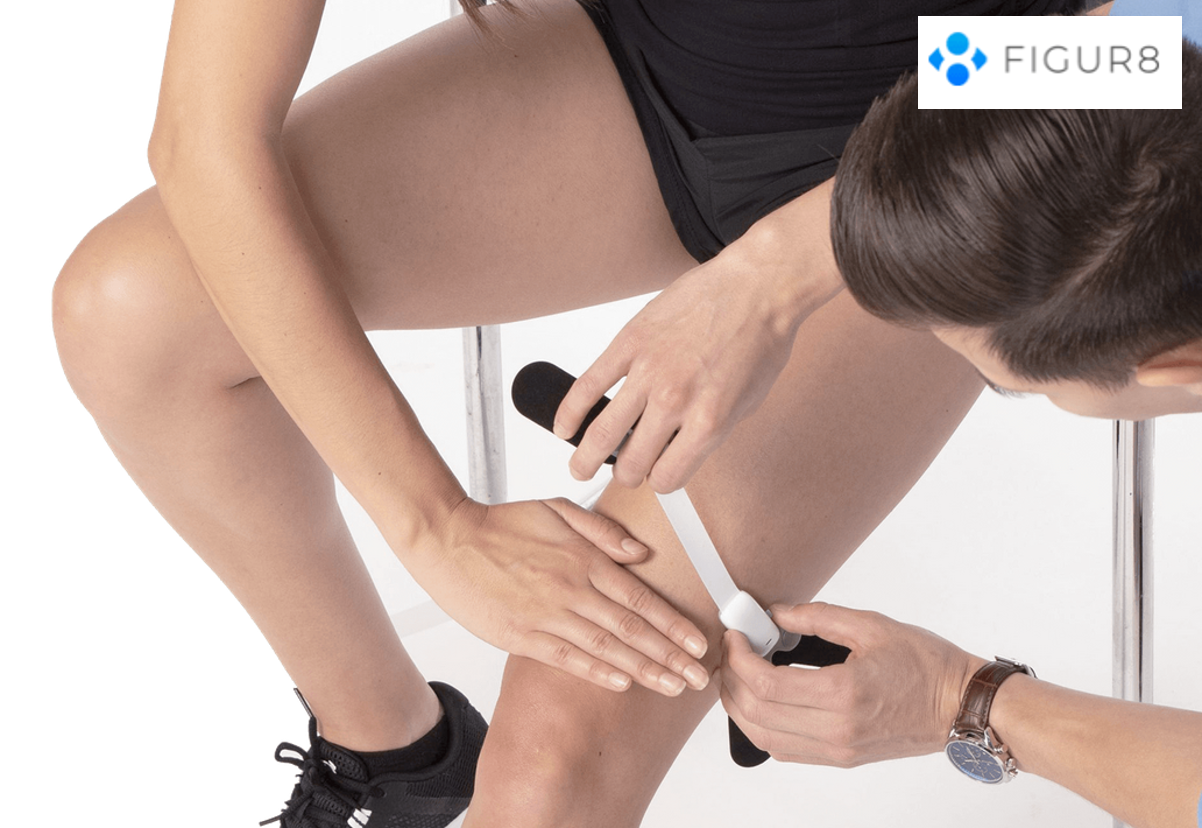
The technology is already in serial production in the US. A startup recently raised several million dollars for a healthtech business model based on mateligent’s sensors. A strain gauge on the abdomen measures breathing via lung expansion – with extreme precision. Particularly relevant for elderly patients and elite athletes. You may guess what the most recent Tour de France winning team used to measure breathing.
Further applications? Just as diverse as NiTi. Since the sensors measure pressure, they can be integrated into shoes to analyze gait patterns – for example for fall prevention. “Falls in old age are a huge risk. And in logistics: robots often crush cartons because they cannot ‘feel’. With our sensors, that changes.”
And if robots with sensitive fingers aren’t futuristic enough: the sensor can also function as an actuator. Instead of measuring voltage changes, a sinusoidal voltage is applied. The silicone membrane begins to oscillate. This enables ultra-fast, highly precise pumps with simultaneous amplitude and frequency modulation — and membrane oscillation reaching kilohertz ranges.
Corporate Structure
The applications are numerous. Maintaining focus is critical. “There are many companies that want to use our technology in very specific niches,” says Preetz. Therefore, mateligent was structured as a holding and think tank. “Technology is not a single product.” Today, the group consists of:
- mateligent nititec GmbH – focusing on NiTi technology
- Spin-off nititec vacuum gripper – €3 million invested to launch vacuum gripping technology in 2026
- mateligent iDEAS GmbH – focusing on electroactive polymers, also backed by €3 million
The companies hold around 100 patents. The next step: acquiring another patent portfolio from the university co-founders. For the first time, investment in mateligent GmbH is now possible via Tokenize.it. Through profit participation rights that economically align investors with shareholders.
So perhaps: give technology from Saarbrücken a chance. It is often far less boring than it first appears.
About Jens Preetz:
Jens Preetz began his professional career by studying Energy and Automation Engineering with a focus on renewable energy in Konstanz. After graduating, he joined a startup, where he initially worked as a production manager before moving into sales. Alongside his corporate career, the now 59-year-old father of two became self-employed, providing sales training and consulting services to companies. He later joined ETO in Stockach as a Key Account Manager. “That’s where I started building my expertise in mechatronics and actuator systems,” he recalls. Preetz was responsible for developing the passenger car customer segment. In 2004, he moved into management at Kendrion, where he oversaw Sales, Marketing, and Business Development globally within the industrial division.
After around 25 years of professional experience in mechatronics — primarily focused on electromagnets and valves — he encountered the technology that would later become mateligent’s core innovation. In 2018, at a trade fair booth of the iMSL Institute at Saarland University, he saw the first prototypes. He immediately recognized the disruptive potential. “It was a Nokia moment,” he says — a technology shift that would redefine the market. However, the management of his then-employer did not share his assessment and continued to focus on electromagnetic solutions. Convinced of the opportunity, Preetz left the company after eleven years. In 2020, he joined iMSL as a consultant. In 2021, together with Paul Motzki and Stefan Seelecke — the scientific minds behind the technology — he founded mateligent.
Today, the group brings together highly qualified managing directors and developers. As a shareholder, Preetz focuses entirely on investor relations and the strategic growth of the company.